
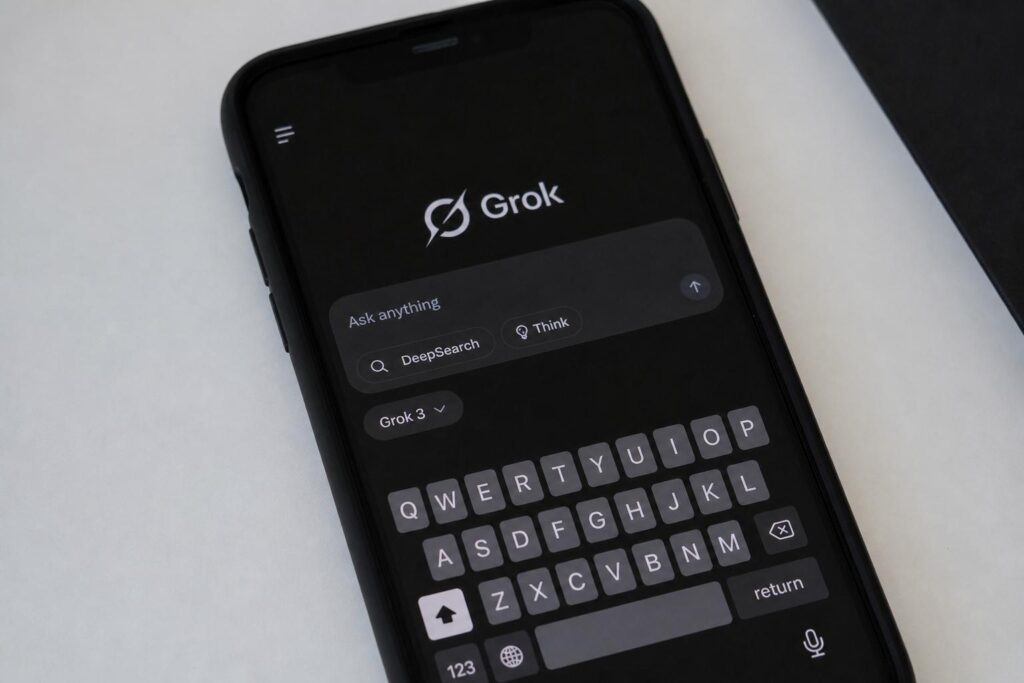
If you hang around tech circles long enough, you hear big words tossed around like confetti: uncensored, unfiltered, unleashed. Grok, the conversational AI from xAI, sits in the center of that whirlwind. The promise sounds bold—sharp wit, fewer guardrails, answers that don’t beat around the bush. But what does that freedom actually look like when you ask real questions?
This piece takes a close, realistic look at Grok’s latitude. I’ll unpack the gap between marketing language and product reality, the difference between moderation and censorship, and how expectations shape our sense of “freedom.” Along the way, I’ll touch the phrase Grok без цензуры: насколько свободна нейросеть (свобода ответов Grok) because it captures the central tension in plain terms—how open can a model be while still avoiding harm?
We’ll navigate controversial ground without turning it into a spectacle. The point isn’t to glorify an “anything goes” mode. It’s to understand where Grok stands on a spectrum—bolder than some, still bound by law, policy, and engineering choices. If you want an honest read on freedom in AI systems, keep going.
What “uncensored” can and cannot mean for an AI
When people imagine a model “without a muzzle,” they picture straight answers to tough questions, not endless disclaimers. Fair. But in practice, large language models sit inside several overlapping frames: law, platform rules, business risk, and safety research. Those frames exist whether a company leans edgy or cautious.
Start with the training data. It’s filtered to remove the worst of the web—abuse, explicit illegal content, and certain personal information. Then come policy layers during fine-tuning: reward signals that shape how the model behaves. After that, most companies add runtime moderation: separate classifiers that screen inputs and outputs.
That stack isn’t new or unique to xAI. It’s the common architecture of modern AI deployments. So “uncensored” tends to mean looser around the edges (style, tone, willingness to discuss sensitive topics), not a blank check to wander into illegality or abuse. If anyone sells you true zero-guardrail AI at scale, read the fine print twice.
Put differently, Grok без ограничений is more a vibe than a literal switch. The emphasis is on candor and humor, not on breaking rules. Expect sharper phrasing and fewer reflexive refusals; do not expect instructions for wrongdoing or targeted harassment.
What Grok set out to be
xAI positioned Grok as fast, witty, and willing to engage with questions many chatbots handle with cotton gloves. Early messaging highlighted a sense of humor and a readiness to answer “spicy” prompts with aplomb. That marketing pitch resonated with users tired of overly sanitized replies.
Another part of the appeal is recency and relevance. The system has been described as drawing from fresh, dynamic streams of information, particularly on X. That matters for timeliness, but timeliness isn’t the same as permissiveness. A model can be current and still decline requests that cross policy lines.
“Uncensored” in this context signaled attitude: fewer euphemisms, more straight talk. If you ask about a controversial policy, you might get a candid, even cheeky, explanation instead of a wall of caveats. For many users, that alone feels like freedom. It’s a style shift as much as a substance shift.
Even so, the guardrails don’t vanish. If the topic veers into illegal instructions or targeted harm, the brakes come on. The tension is the story. Grok без цензуры: насколько свободна нейросеть (свобода ответов Grok) really means balancing expressive clarity with hard lines.
Where Grok can feel freer than most models
People notice tone first. A reply that reads like a human who’s had coffee—clear, slightly irreverent, willing to tackle hard topics—feels liberating compared to corporate boilerplate. That’s a big part of why Grok stands out in demos.
Next is its willingness to wade into thorny civic, cultural, or historical questions. Some models default to “as an AI, I cannot…” even when a straightforward, sourced answer would be perfectly safe. Grok’s posture, by design, tends to lean into the question rather than away from it.
Users also report fewer blanket refusals on broadly sensitive material. Asking for a breakdown of a controversial biography, a scandal, or a heated policy debate often yields a direct, structured answer with competing perspectives laid out plainly. It can feel like having a well-informed friend who doesn’t tiptoe.
This is where спорные темы Grok come into play. Politics, public health communication, platform governance—subjects where emotions run high. A system that acknowledges tension and still answers clearly earns trust, even if it occasionally says, “I don’t have enough credible data to go further.”
All that said, “freer” is contextual. Style is not scope. The outer boundary—no targeted harm, no illegal instructions—remains. If anything, being bolder with tone demands steadier scaffolding elsewhere so the system doesn’t stumble where it must not.
Where the brakes are firm
Every real-world AI has a short list of red lines. They look similar across vendors because the risks don’t change. If someone asks for step-by-step instructions to commit a crime, the answer is no. If someone requests targeted harassment or hate, the answer is no.
The same goes for self-harm facilitation, child exploitation, and personally identifiable information used for doxxing. These categories are not gray. They’re lockbox areas where refusal is not only prudent but necessary. Here, calling it цензура в Grok misses the point—this is risk management and basic ethics.
Another set of constraints is more procedural. Medical or legal advice is generally couched with caution, high-level information, or clear disclaimers. The model may signpost the need to consult professionals. That’s not fence-sitting; it recognizes the danger of confident errors when stakes are high.
Finally, there are platform-specific rules. App stores, hosting providers, and ad partners all have content standards. Even a company culturally inclined toward edgy speech must play by those rules. Freedom inside the product is always shaped by these external guardrails.
How moderation actually happens under the hood
Think of moderation in layers. The first is the system prompt, which quietly instructs the model about tone and boundaries. It might say: be helpful, be honest, avoid illegal content, escalate safety concerns. That baseline nudges every response.
The next layer is safety classifiers. These are specialized models that screen both your prompt and the model’s draft answer. They look for patterns that signal risk: self-harm requests, hate, sexual content involving minors, or detailed illegal instructions. If a flag is raised, the system blocks, rewrites, or routes to a safer template.
Then there’s RLHF—reinforcement learning from human feedback. Annotators reward answers that reflect policy and penalize those that breach it. Over time, the model internalizes a behavioral map: where to engage, where to refuse, where to summarize cautiously.
Post-processing can add another pass. Even after the model drafts a reply, a final filter may excise a problematic sentence or swap in a safer variant. That’s why jailbreaks that work one day can fail the next. Each layer can be updated independently.
In that light, labeling every boundary as цензура в Grok oversimplifies. Much of it is just scaffolding to keep a general-purpose system from being misused, while still delivering direct, valuable answers on hard questions.
Debating censorship versus responsible design
Words matter. Censorship implies suppression of ideas for ideological reasons. Moderation implies rules designed to prevent harm. The two can blur, especially on politicized topics, but they’re not the same thing.
With Grok, friction tends to appear when a user expects policy-agnostic commentary but runs into a refusal tied to platform or legal constraints. That can feel arbitrary. Clearer explanations of “why” can turn frustration into understanding, which is why transparency features are so useful.
There are also business realities. Running a mainstream AI requires compliance across jurisdictions and distribution channels. If you want wide reach, you accept tradeoffs. Grok без ограничений might be feasible in a lab; in a product with millions of users, boundaries are the cost of doing business.
None of this dodges the debate. It reframes it: we should argue about where lines belong, not pretend lines can vanish. That’s a healthier conversation than insinuating malice every time a model declines a request.
Handling спорные темы Grok: case-by-case nuance
Not all sensitive topics behave the same. Consider politics. Users want context, timelines, and argument maps, not a tut-tut. A capable system can outline positions, cite key events, and note where credible sources disagree, all without endorsing a side.
Public health is similar but higher stakes. Misinformation spreads easily; so do confident mistakes. A measured approach summarizes consensus views, flags uncertainty, and points to reputable sources. If it avoids wild speculation, that’s restraint, not censorship.
Hate speech and harassment, by contrast, are not debate topics. They are moderation categories with crisp definitions. A tool designed for the general public can’t permit targeted degradation. Here, rules are rules; the system should refuse and, if appropriate, offer education or de-escalation resources.
Illegal instructions are in their own bucket. High-level safety info is often fine: explain the physics of combustion, not how to weaponize it. Smart models draw that line automatically. If Grok refuses specifics while still teaching the underlying science, that’s proper boundary setting.
In all these cases, the model’s tone matters. An answer can be frank without being flippant, careful without being sterile. That’s the sweet spot for спорные темы Grok—direct, sourced, and alert to how information might be misused.
A pragmatic way to explore freedom without crossing lines
If you want to gauge how open a system is, you don’t need to poke its worst-case edges. You can learn a lot by asking tough but legitimate questions and seeing how it handles nuance. The goal is to test posture, not trigger alarms.
Try requesting comparisons across contentious policies with clear criteria: evidence quality, tradeoffs, stakeholder impacts. See if the model can build a structured, neutral frame. If it dodges, that tells you something; if it engages, that tells you more.
Ask for steelman and strawman summaries of opposing arguments. Good systems can articulate the strongest case for sides they don’t “prefer,” then critique both fairly. That’s openness with intellectual rigor, and it rarely trips safety wires.
You can also explore satire and humor when appropriate. If the model can be witty without being cruel, you’ve found a system that balances expression with care. That’s often what people mean when they praise Grok без ограничений—a voice that feels human without turning toxic.
- Prompt for timelines of controversial events with citations.
- Request pros and cons with quantified uncertainties when possible.
- Ask for policy alternatives rather than singular prescriptions.
- Explore hypothetical scenarios that surface tradeoffs, not taboos.
- Invite the model to list what it cannot answer and why.
- Probe for transparency: “What assumptions did you make here?”
What a healthy refusal looks like
A good refusal is specific, brief, and helpful. It names the issue (“I can’t assist with illegal activity”), gives a reason (“that could cause harm or break the law”), and offers a safe alternative (“I can explain the general principles of X or point you to safety guidelines”).
It also avoids scolding. The best systems decline without moralizing, then pivot to something constructive. Users don’t need a lecture; they need a path forward that still respects rules.
When refusals are consistent and transparent, people are less likely to call them цензура в Grok. They’re more likely to accept them as part of the deal: freedom where it’s responsible, boundaries where it’s necessary.
Mapping topics to typical behavior
High-level expectations help you set your bearings. The following table outlines common categories and how mainstream, safety-minded systems generally respond. It’s a guide, not a contract; models evolve, and implementations vary.
| Topic category | Typical model posture | What you’ll likely see |
|---|---|---|
| Controversial politics | Engage with care | Balanced summaries, multiple viewpoints, sourcing |
| Public health debates | Evidence-first | Consensus views, uncertainty noted, references to reputable orgs |
| Hate or harassment | Refuse | Clear decline, possibly educational resources |
| Illegal instructions | Refuse specifics | High-level info allowed, detail blocked |
| Adult content | Restricted | Contextual discussion ok; explicit material typically blocked |
| Satire and humor | Allowed with care | Witty tone without slurs or targeted cruelty |
| Personal data requests | Refuse | Privacy protection, safe alternatives |
| Scientific risk topics | Guarded clarity | Conceptual explanation, safety framing, no hazardous specifics |
Use this map as a mental model when you assess спорные темы Grok. If the system engages where expected and declines where prudent, that’s a sign of mature design, not timid hedging.
How Grok compares to other AI postures
Broadly, you’ll find a spectrum. Some labs prioritize extreme caution and heavy refusals to minimize any chance of harm. Others, like xAI, emphasize directness and humor while still honoring bright red lines. The differences often appear in tone and borderline cases, not in the non-negotiables.
One model may say, “I can’t discuss that,” where another says, “I can discuss it, but here are sensitivities and credible disagreements.” Both are valid stances; one simply feels freer because it explains instead of deflecting. Grok tends to be marketed as the latter.
Features like real-time awareness don’t inherently change safety posture, but they can make a system feel more alive in current events. That ups the stakes: fast-moving news requires careful sourcing and the humility to say, “too early to tell.” Tone without rigor just raises the risk of crisp-sounding errors.
If you’re comparing systems, test how they handle ambiguity. The model that admits uncertainty rather than papering it over may actually be the freer one, because it trusts you with the truth instead of pretending omniscience.
Laws, platforms, and business pressure shape the edges
Products live in jurisdictions, and jurisdictions have rules. The United States, the European Union, and many other regions enforce different standards for illegal content, data protection, and platform responsibility. Companies adapt deployment to comply, or they don’t deploy at all.
Distribution channels also exert gravity. App stores and payment providers set content policies that filter back into product design. If you want to reach users on mainstream platforms, you conform to those standards whether you like them or not.
Advertisers and enterprise customers add another layer. They care about brand safety, data handling, and consistency. A model that randomly veers into offensive content won’t last long in that world. This is why even “edgy” systems set clear boundaries.
When people talk about Grok без ограничений, these realities are easy to forget. But they’re not optional. They’re the floor under your feet—the reason broad deployment is possible in the first place.
Common myths about unlimited AI
There’s a romance to the idea of a totally unrestrained system. It suggests authenticity, grit, and independence. In practice, it suggests lawsuits and product bans. The better conversation is about targeted freedom: where more candid answers help, and where restraint protects people.
Here are recurring myths and their more accurate counterparts. They show why a smart balance beats absolutism.
- Myth: “Uncensored” means the model will answer anything. Reality: It means fewer unnecessary refusals within legal and ethical boundaries.
- Myth: Guardrails are always political. Reality: Many are about safety, privacy, and liability, not ideology.
- Myth: More freedom equals better truth. Reality: Precision and sourcing matter more than swagger.
- Myth: Refusals are censorship. Reality: Some are harm prevention; good products explain the difference.
Grok без цензуры: насколько свободна нейросеть (свобода ответов Grok) lands squarely in this tension. Real freedom is made of transparency and competence, not performative edge.
Getting better answers without crossing lines
If you want candid, high-value answers, the way you ask matters. Models mirror your framing. Precise questions elicit specific, useful responses; vague asks invite generalities and disclaimers.
Anchor your prompt with goals and constraints. Say what you need, why you need it, and what sources you trust. Ask for uncertainties and counterarguments. You’re not tricking the model—you’re unlocking its ability to reason within safe bounds.
Where temptation exists to push boundaries, pivot to the underlying knowledge. Instead of “how to do X harmful thing,” ask “what principles make X risky and how do professionals mitigate that risk?” You’ll get insight without instruction, which is better for everyone.
- Use verbs that suggest analysis: compare, evaluate, synthesize.
- Specify formats: timeline, bullet pros/cons, decision matrix.
- Name credible source types: peer-reviewed studies, government stats.
- Invite caveats: “Note major uncertainties and what would change your view.”
- Request viewpoint diversity: “Summarize strongest arguments from each side.”
- Ask for a brief “what I cannot answer and why” if you expect boundaries.
The net effect is a conversation that feels open and informative. It’s exactly what advocates of Grok без ограничений often want: fewer hedges, more substance, still within the lines.
Satire, personality, and the usefulness of voice
Style may seem superficial, but it affects comprehension and trust. A crisp, occasionally playful voice clarifies ideas and keeps you reading. It also avoids the uncanny chill that plagues many AI systems.
Humor, used well, can defuse tension in polarized topics. It’s a way to acknowledge absurdities without alienating people. The key is punching up, not down, and never turning wit into a weapon against individuals or protected groups.
Grok’s branding leans into that charm. Done right, it makes hard material more digestible. Done poorly, it trivializes serious issues. The line is thin; good systems walk it with measurable care, not just bravado.
Jailbreaks aren’t a measure of freedom
You’ll see threads boasting about coaxing models into breaking rules. These exploits are temporary. Developers patch them, classifiers get smarter, prompts get updated. Treat jailbreaks as bug reports, not product features.
Measuring a system by its susceptibility to circumvention is like judging a car by how easily you can pop the trunk with a coat hanger. It says more about security gaps than about core design. The right test is how the system behaves when used as intended.
If anything, steady improvements in refusal quality and policy clarity tell you more. The safer the boundaries, the more room the system has to be candid where it counts. That’s the quiet paradox beneath claims of freedom.
Transparency features that make “freedom” credible
Users don’t need perfection; they need to know the rules of engagement. A short note explaining a refusal, a link to policy categories, or a toggle for “show reasoning assumptions” does wonders for trust. It turns a black box into a glass one.
Another helpful pattern is letting users ask, “Why did you decline that?” Models can summarize the trigger without exposing internal prompts. It’s the difference between a stone wall and a conversation about safety.
Source visibility matters too. When a claim leans on current events, cite reputable outlets. When summarizing studies, name the journals or institutions. Candor about uncertainty is part of the same ethic.
These features don’t remove guardrails. They make guardrails feel fair. And that, paradoxically, makes a system feel freer because you understand the boundaries you’re working within.
Regional context and cultural friction
Freedom means different things in different places. Some countries lean toward strict content controls; others favor maximal speech. Global AI products navigate that patchwork by adapting or restricting access.
Users sense these differences. A question tolerated in one region may get a softer or firmer response elsewhere. Expect minor variants in behavior tied to local law and platform standards. Calling all of this цензура в Grok flattens a complex reality into a slogan.
For practical purposes, assume you’re using a product tuned for broad compliance. That’s the cost of a unified experience. Niche deployments might draw different lines, but mainstream offerings converge on similar norms.
Safety isn’t the enemy of candor
It’s tempting to treat safety as the opposite pole of openness, but the two aren’t zero-sum. Clear boundaries make direct speech possible because they reduce the risk of catastrophic failures. Without them, the whole product becomes too risky to ship widely.
Think of it like a highway. Guardrails let you drive faster because you trust the road. Take them away and people slow down—or crash. The same logic applies to conversational systems with millions of users and countless edge cases.
If Grok feels more candid while still avoiding harm, that’s a design success, not a contradiction. It shows that tone and transparency can expand perceived freedom without abandoning responsibility.
What to watch as the ecosystem evolves
Three areas will shape how free mainstream AI feels in the coming years. First, better safety taxonomies: clearer categories and more precise thresholds reduce false positives and pointless refusals. Precision is liberating.
Second, improved provenance and citation tools. When models can ground claims reliably, they earn the right to speak more plainly about sensitive topics. Stronger sourcing supports stronger speech.
Third, user controls. Adjustable settings—within legal limits—could let people opt into bolder tone or stricter filters. That respects different contexts: a classroom needs one posture, a private research session another.
None of this requires abolishing guardrails. It requires making them smarter, more visible, and more adaptable to real-world needs.
Practical tips for using Grok on heated topics
If you want the most value from a system positioned as candid, set it up to succeed. Give context: your goal, audience, and constraints. Ask it to map viewpoints before evaluating them.
Request structured outputs: a table of tradeoffs, a timeline of events, a list of assumptions. The more you corral complexity into legible formats, the less room there is for meandering or hedging.
When a refusal appears, follow up: “Can you explain the principle behind this without operational detail?” That nudge often recovers a useful answer without crossing boundaries. It’s collaboration, not combat.
Finally, remember that brisk tone isn’t a synonym for correctness. Ask for sources. Invite uncertainty. Precision beats swagger every time, even in a system known for a lively voice.
A clear-eyed take on freedom and limits
We circle back to the real question: Grok без цензуры: насколько свободна нейросеть (свобода ответов Grok)? Free enough to feel human in tone, to meet hard questions head-on, and to avoid needless hedging. Not free enough to hand out dangerous instructions or enable targeted harm—and that’s by design.
Labels like Grok без ограничений capture a mood—plain talk, fewer euphemisms, more willingness to engage. The substance lives in the details: consistent boundaries, transparent refusals, evidence-forward explanations, and a personality that helps without hurting.
If you measure freedom by whether a model explains rather than evades, handles спорные темы Grok with clarity, and tells you what it cannot do and why, Grok lands on the freer side of the mainstream spectrum. That isn’t a loophole; it’s a choice. Make the most of it by asking better questions and expecting honest, sourced, and responsible answers.
